


Vintage Classic Retro
In the past, we cut kits (which were designed by various members of the vintage group and laser-cut/sold as kits by us with permission) semi-exclusively for the private group TFA (The First Aviators) and later the PH-SAM (a spin-off of the worldwide chapter SAM, or Society of Antique Modellers https://www.antiquemodeler.org/).
These have since more or less disbanded, and we offer the kits to every vintage enthusiast as part of our vintage and classic section in our webshop.
With a few designers, we have also designed a number of vintage, classic, and retro models based on models from the past, but with our own internal construction.
This is because vintage models from the mid-20th century are difficult to obtain, and there is still a substantial group who enjoy flying these types of models.
These are not true copies, but derivatives of earlier models where the basis is the same, but our own modern techniques have been used for design and production.
It is certainly not our intention to produce true copies of earlier models, and the basic rights to these original models truly belong to their designers (sometimes models from the 1930s to the 1950s).
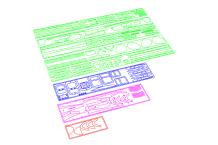
Our kits contain all the wooden parts for the model (laser-cut and loose wood such as spars, planking, etc.), control cables, rudder levers, and other hardware.
Some originally free-flight models have been adapted for RC and diesel propulsion. Diesel is now suitable for diesel, methanol, or electric propulsion.
The drawings are a mix of the original and modern CAD drawings.
The models are not suitable for the novice modeler because they require some personal insight and input in the design.
Product 1 to 16 (of 16 products)
Result:1
RCEurope
€50,00
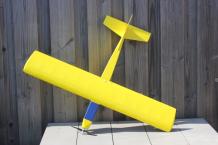
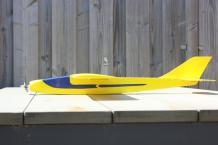
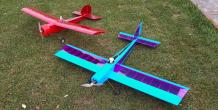
This model is compact, maneuverable, retro yet sleek, and flies incredibly smoothly.
Suitable...
RCEurope
€139,95
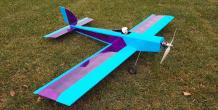
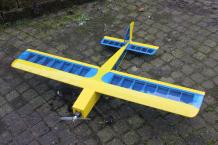
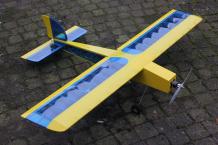
The Quicky is a model based on models from the 70's to the 90's which were suitable as trainer but...
RCEurope
€139,95
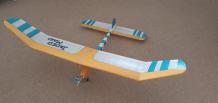
The Micky is a model based on models from the 70's to the 90's which were suitable as trainer but...
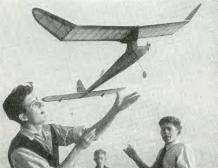
Retroplanes
€109,00
Original design 1951
Wingspan 145/150 cm
Length 89 cm
Engine 2.5cc or 28mm electric...
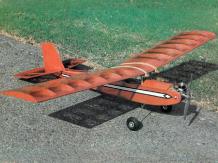
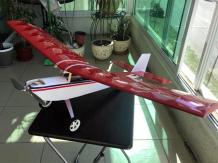
Retroplanes
€99,00
Vintage model from the ½ A class.
Wingspan 91cm
Length 71cm
Engine: 0.8 Cox to 1.8cc or...
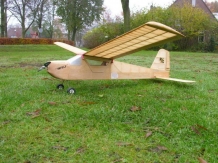
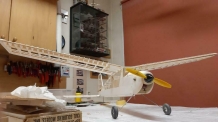
RCEurope
€129,95
De Impuls is een model uit de jaren 50/60 welke gevlogen werd als 1 kanaals radiobestuurd model met...
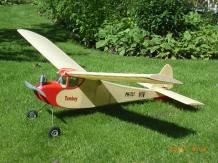
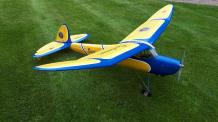
Retroplanes
€99,00
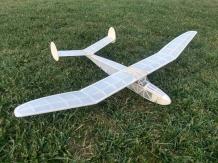
Beautiful and elegant retro model from the 1950s with a modern twist for a smooth build.
This...
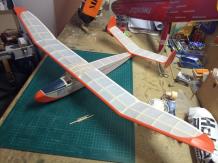
Retroplanes
€64,95
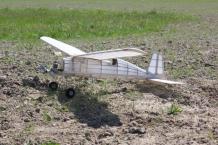
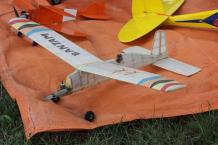
A lot of wood, slats, and laser-cut parts, including landing gear, must be bent to size according...
Retroplanes
€179,00
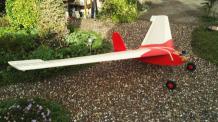
A unique model from the 1950s.
This model is for the experienced builder and pilot (due to tip...
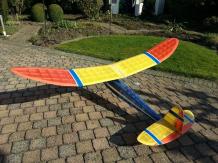
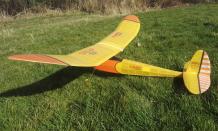
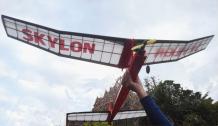
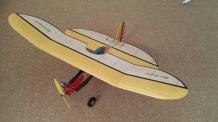
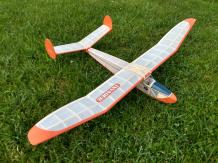
Retroplanes
€35,00
This kit is based on the model designed by Albert Hatfull during World War II.
We have converted...
Product 1 to 16 (of 16 products)
Result:1
Who isn't familiar with the photos and stories of the past, where the whole family would accompany them to the heath or fields where daring model builders would launch their "big" aircraft, often landing further away after a free flight of just a few minutes, usually without damage, but sometimes, unfortunately.
Later, the first RC controls came, consisting of push-button transmitters (pressing once for left, pressing again for right, and a third time for neutral) and even later, the proportional transmitters we know today.
These models were designed based on the old models of the past. Often, the outer contours of the models were used as a basis for a largely custom-designed internal structure.
This resulted in vintage models that were still strong enough for modern propulsion systems, and some were converted for full RC propulsion. Elevation and Direction are the foundation for all of them, while some also have built-in ailerons or are designed to allow for them.
The models drawn by the designers are therefore not exact copies of the original, but derivatives, so we believe no copyright infringement has occurred. The goal is to make these models accessible again to modelers who appreciate the vintage look and would like to fly them (at home or as part of a "vintage flyer" team).
We have a list of the bases for virtually every model to ensure openness and transparency, but the name is different in our case (derived from or with a nod to the original).


